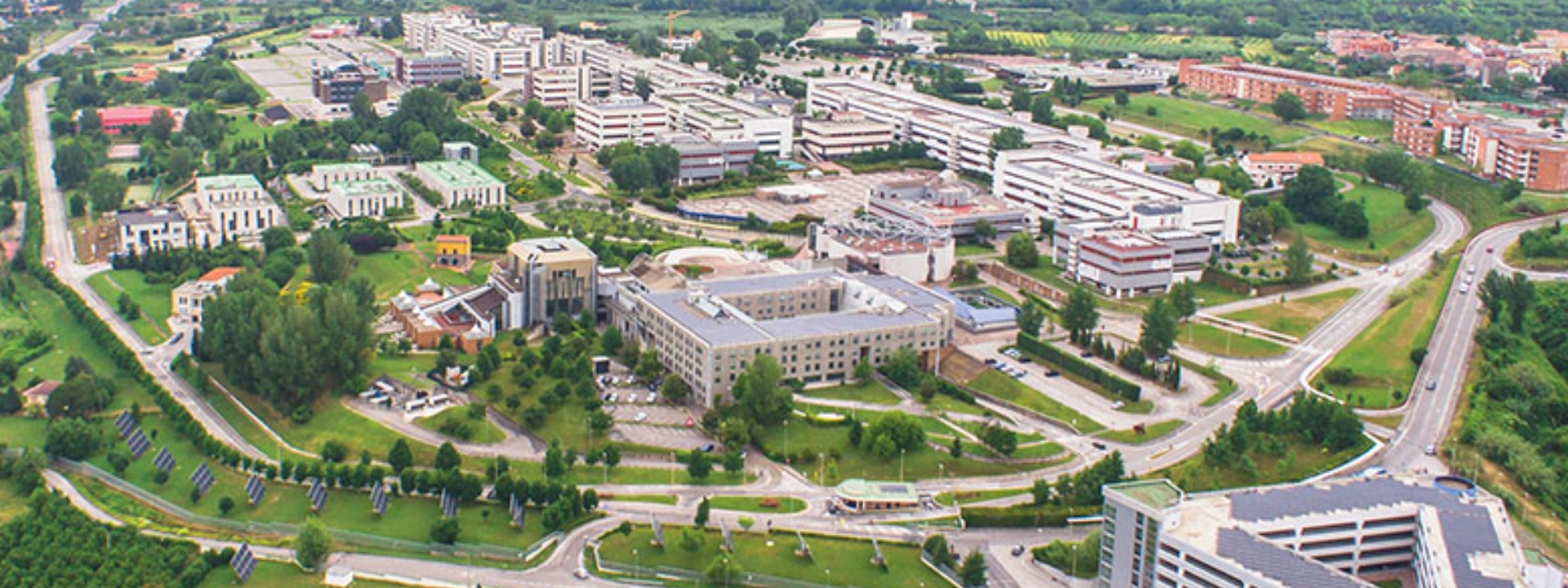
The 2024–2025 dataset of degree programs at the University of Salerno offers a fascinating overview of the academic landscape, reflecting both the diversity of disciplines and the dynamic balance between students across study levels. This year, the University features 177 programs, distributed across Bachelor’s, Master’s, PhD, and specialization diplomas.
Master’s degrees represent the largest share, with 80 programs offered, closely followed by 74 Bachelor’s programs. Doctoral studies remain a strong component of the University’s academic portfolio, with 22 PhD programs across a wide range of departments, while a single Second Level Academic Specialisation Diploma completes the picture. These figures confirm the University’s commitment to maintaining a comprehensive educational ecosystem, from undergraduate to advanced research levels.
Looking more closely at the departments, the picture becomes even more vivid. The Department of Humanities, Philosophy and Education (DISUFF) stands out with a significant presence in both Bachelor’s and Master’s programs, alongside a particularly high number of enrolled students. The Department of Humanities (DIPSUM) and the Department of Cultural Heritage Sciences (DISPAC) also contribute notably, especially within the humanities and cultural studies area. In the field of social sciences, the Departments of Political and Social Studies (DISPS), Political Science and Communication (DISPC), and Economics and Statistics (DISES) offer a broad academic portfolio that spans Bachelor’s, Master’s, and PhD levels.
On the scientific and technological side, the University’s engineering and science departments are equally active. The Department of Industrial Engineering (DIIN) and the Department of Civil Engineering (DICIV) jointly host a strong offering of Bachelor’s, Master’s, and PhD programs, highlighting the University’s role in advancing technical education and applied research. The Department of Information Engineering, Electrical Engineering and Applied Mathematics (DIEM), the Department of Computer Science (DI), and the Department of Mathematics (DIPMAT) strengthen the digital and analytical disciplines, while the Departments of Chemistry and Biology (DCB), Pharmacy (DIFARMA), and Physics (DF) complete the scientific spectrum. The Salernitan Medical School (DIPMED) confirms its central role in medical and health sciences with multiple programs across Bachelor’s, Master’s, and PhD levels.
From a demographic perspective, the dataset provides an interesting insight into gender distribution across faculties. Overall, several departments record a majority of female students, especially in the humanities and education fields. DISUFF, for instance, reports over 3,600 female students compared to just over 1,000 males, while departments such as DIPSUM, DISPAC, and DIFARMA also show a clear female prevalence. Conversely, STEM departments reveal a different trend. The Department of Computer Science (DI), for example, counts more than 2,200 male students versus just over 300 females, and a similar imbalance is observed in the engineering departments, where male enrollment exceeds female participation. This gender distribution reflects persistent patterns seen across many universities, where women tend to dominate the humanities and social sciences, while men remain more represented in STEM fields.
Age distribution adds another layer to this profile. The data reveal that Bachelor’s programs attract the youngest students, with more than 9,000 aged 20 or younger and over 11,000 between 21 and 40 years old. Master’s programs also draw a primarily young adult population, with over 10,000 students between 21 and 40, while doctoral programs naturally reflect a more mature demographic, including nearly 800 students, most of whom are in the 21–40 range. The small number of students over 40, mainly in Master’s and specialization courses, illustrates the University’s continuing appeal for lifelong learners and professionals seeking further qualifications.
Altogether, the 2024–2025 dataset highlights a vibrant and evolving academic environment at the University of Salerno. The balance between humanities, social sciences, and STEM fields, combined with a strong representation of women in education and culture-related disciplines and men in technical and scientific ones, paints a diverse and dynamic picture. These patterns underscore the University’s commitment to inclusivity, innovation, and interdisciplinary growth, continuing to position Salerno as a key player in Italy’s higher education landscape.